Work-Life Balance for Dual-Income Families: 7 Strategies
When both parents work full-time, family logistics get genuinely hard. Here are 7 strategies from dual-income families who've figured it out.
Dual-income family life is a logistical marathon. Between two demanding jobs, school runs, after-school activities, meal planning, and the constant stream of admin that family life generates, it can feel like you're permanently sprinting just to stand still.
Here's the thing: the families who crack this don't have more time than you. They've just built smarter systems — and they've had some honest conversations about how to share the work.
TL;DR: Work-life balance for dual-income families is less about "balance" and more about coordination, shared ownership, and smart systems. This article shares 7 practical strategies that help working parents distribute the load fairly — and actually find time for the life part of work-life balance.
Why Work-Life Balance Is Different When Both Parents Work
When both parents work, there's no "default" parent absorbing household management. Everything has to be explicitly coordinated — and when that coordination breaks down, things fall apart fast and visibly.
Research from the Office for National Statistics shows that dual-income families report significantly higher levels of time pressure than single-income households. The challenge isn't that both parents are working — it's that household infrastructure rarely keeps up.
The families who thrive aren't working less. They're spending less mental energy on the management of the work — and channelling that saved energy into actually being present with their families.
7 Work-Life Balance Strategies for Dual-Income Families
1. Treat Household Management Like a Joint Project
Dual-income couples who thrive tend to treat the household like a shared project with two co-leads — not one manager and one helper. There are no "her jobs" and "his jobs." There are just jobs, distributed based on capacity, preference, and fairness.
This starts with an explicit conversation: who owns what? Make it concrete and granular:
- "I handle all school communications. You handle all medical appointments."
- "I own the weekly shop. You own birthday logistics."
- "We take turns on the school run — I do Monday/Wednesday, you do Tuesday/Thursday."
When ownership is clear, you stop needing to ask, remind, or chase. The right person just handles it.
2. Build One Source of Truth for the Whole Family
If you each have separate calendars, separate to-do lists, and separate mental models of the week, you're doubling the administrative overhead and multiplying the chances of missed commitments.
Consolidate everything into a single shared system that both parents can see and update in real time: one family calendar, one shared task list, one place where all commitments live. When one parent adds an appointment, the other sees it immediately. No more "I didn't know about that."
This sounds simple because it is. The challenge is actually doing it — and sticking to it even when the habit is new.
💡 Quick Tip: Orbitra gives both parents a shared view of the family's tasks, calendar, and daily plan — updated automatically from your emails. No manual entry required. Try it free →
3. Protect Morning and Evening Routines Fiercely
The school run and bedtime are the two highest-stakes logistics windows of the day. Build robust, predictable routines for both — and protect them from disruption wherever possible.
When routines are solid, neither parent has to "figure it out" from scratch each day. You're not making decisions about who does what at 7:15am when everyone's stressed, running late, and someone can't find their PE kit. The routine already knows.
A workable morning structure:
- Evening before: uniforms out, bags packed, lunches prepped (takes 10 minutes, saves 30 in the morning)
- Morning: clear responsibilities split between both parents, agreed in advance
- Standing rule: whoever works from home handles school drop-off, unless otherwise agreed
Predictability reduces decision fatigue — one of the biggest hidden costs of dual-income family life.
4. Default to Standing Delegations, Not One-Off Asks
"Can you handle this?" is a deceptively costly question. It requires you to remember to ask, your partner to context-switch from whatever they were doing, and a negotiation about whether they can manage it. That's three cognitive steps for a task that should just happen automatically.
Replace one-off asks with standing delegations:
- Whoever picks up from school on Tuesdays owns Tuesday logistics
- Whoever does the shopping owns the shopping list
- One parent owns all sports kit — washing, replacing, tracking
When something falls outside the standing delegations, you discuss it. But most of family life is predictable enough to be covered by agreements you set once and don't revisit every week.
5. Use Technology to Handle the Tracking
The cognitive cost of tracking tasks, appointments, and responsibilities across two people's heads is enormous — and it's entirely unnecessary in 2026.
Modern tools can sync shared calendars, extract tasks from emails, surface reminders to the right person at the right time, and generate daily briefings so both parents start the day knowing exactly what's happening. What used to require significant mental overhead can now just run in the background.
The goal isn't to outsource your family's life to an app. The goal is to free up mental bandwidth for the things that actually matter — and tracking the dentist appointment definitely doesn't need to live in your head.
6. Actively Protect Connection Time
When both parents are working, it's easy for couple time and family time to become entirely functional — logistics conversations at dinner, task management on weekends, a constant background hum of coordination.
You have to be deliberate about time that isn't about managing the household. It doesn't have to be elaborate:
- A 20-minute walk together after the kids are in bed
- A no-phones rule at dinner, even just three nights a week
- A standing date once a month, even if it's just a takeaway at home
These aren't luxuries — they're the reason you're building all these systems in the first place. If you don't protect connection time, all your efficiency just gets absorbed by more work.
7. Review and Adjust Your Systems Regularly
What works when your kids are 4 won't work when they're 10. What works when one parent is working from home won't work when they return to an office full-time. Family life is dynamic, and your systems need to evolve with it.
Build a quarterly review habit: 30 minutes every few months to honestly assess what's working, what isn't, and what needs to change. The most successful dual-income families treat their household systems as living, evolving arrangements — not fixed routines that should work forever regardless of what changes around them.
The Real Goal: Less Management, More Family
Work-life balance for dual-income families is less about "balance" (a somewhat misleading concept) and more about coordination, shared ownership, and smart systems.
The families who thrive have built infrastructure that distributes the management work fairly — and then uses technology to reduce that management overhead further. They're not doing less work. They're spending less mental energy on the management of the work — and spending that saved energy on the life part.
You're already doing the hard part. Let better systems handle the rest.
Ready to Make Dual-Income Family Life a Bit Easier?
Orbitra was built for exactly this. Our AI assistant syncs your family's Gmail and calendar, extracts tasks automatically, and gives both parents a shared view of what's happening — so coordination runs in the background instead of consuming your evenings.
✨ What you get:
- AI task extraction from Gmail
- Unified family calendar both parents can see
- Personalised daily digest
- Family chat assistant
- 7-day free trial, no credit card required
Get Orbitra Free | Learn More →
You Might Also Like
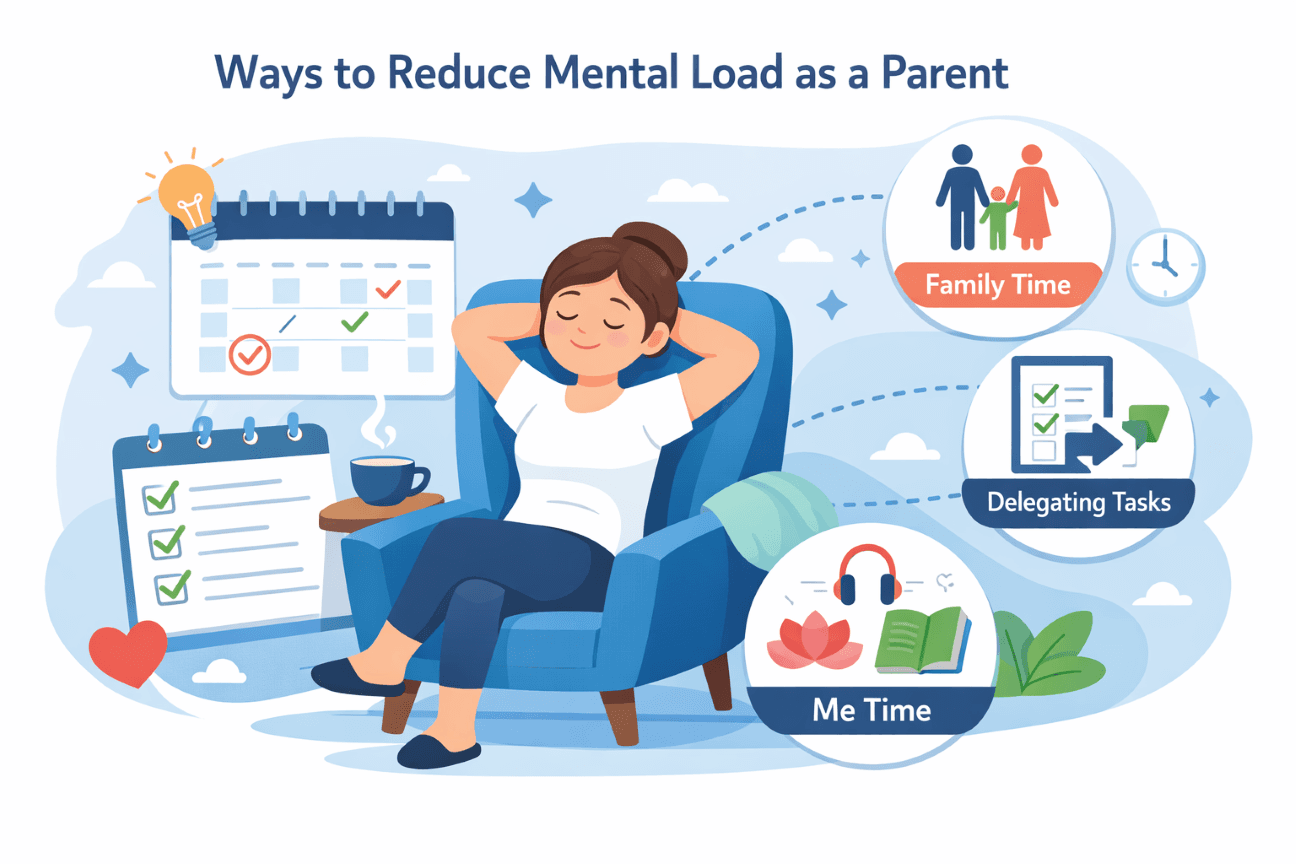
- 10 Ways to Reduce Mental Load as a Parent - Practical strategies for sharing the invisible work of running a family
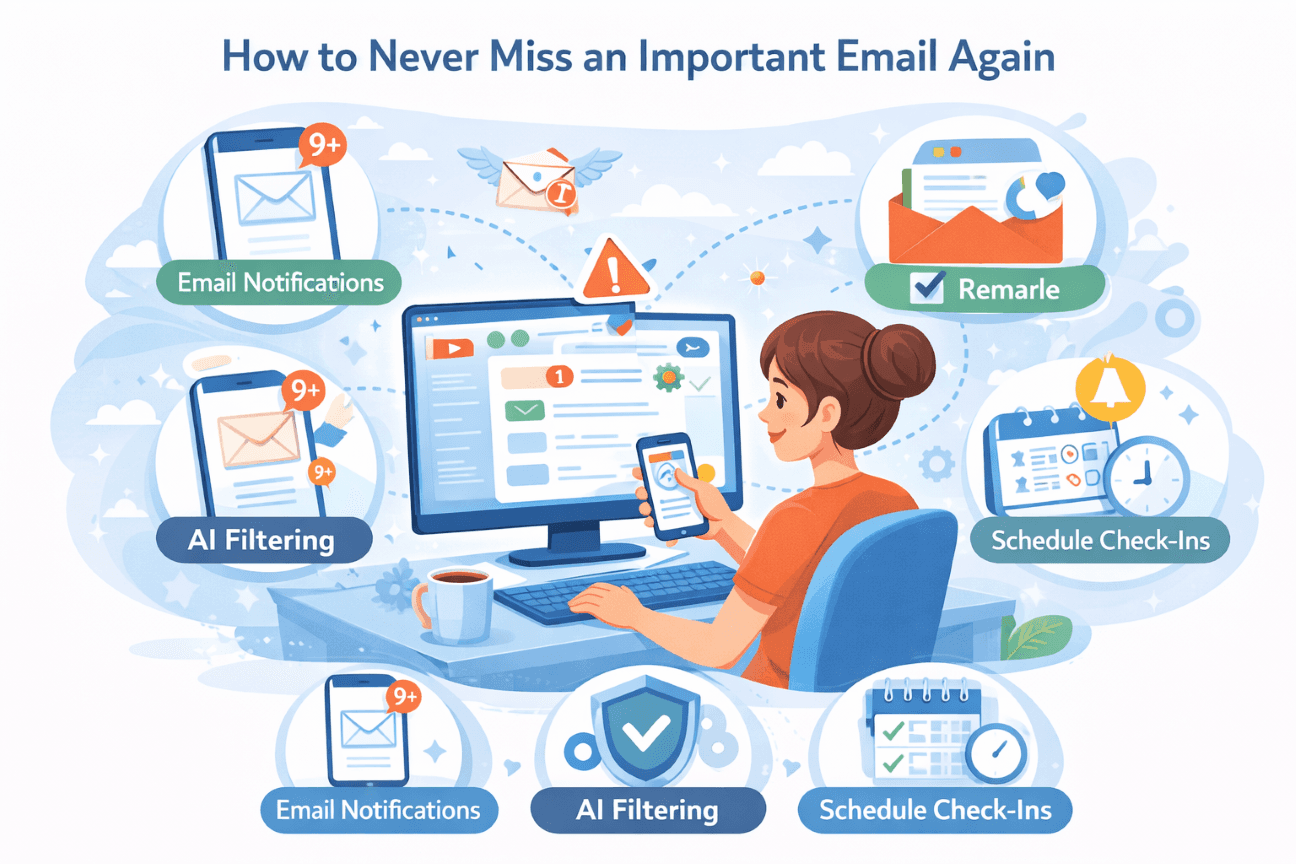
- How to Never Miss an Important Email Again - A simple system for staying on top of family emails without the stress
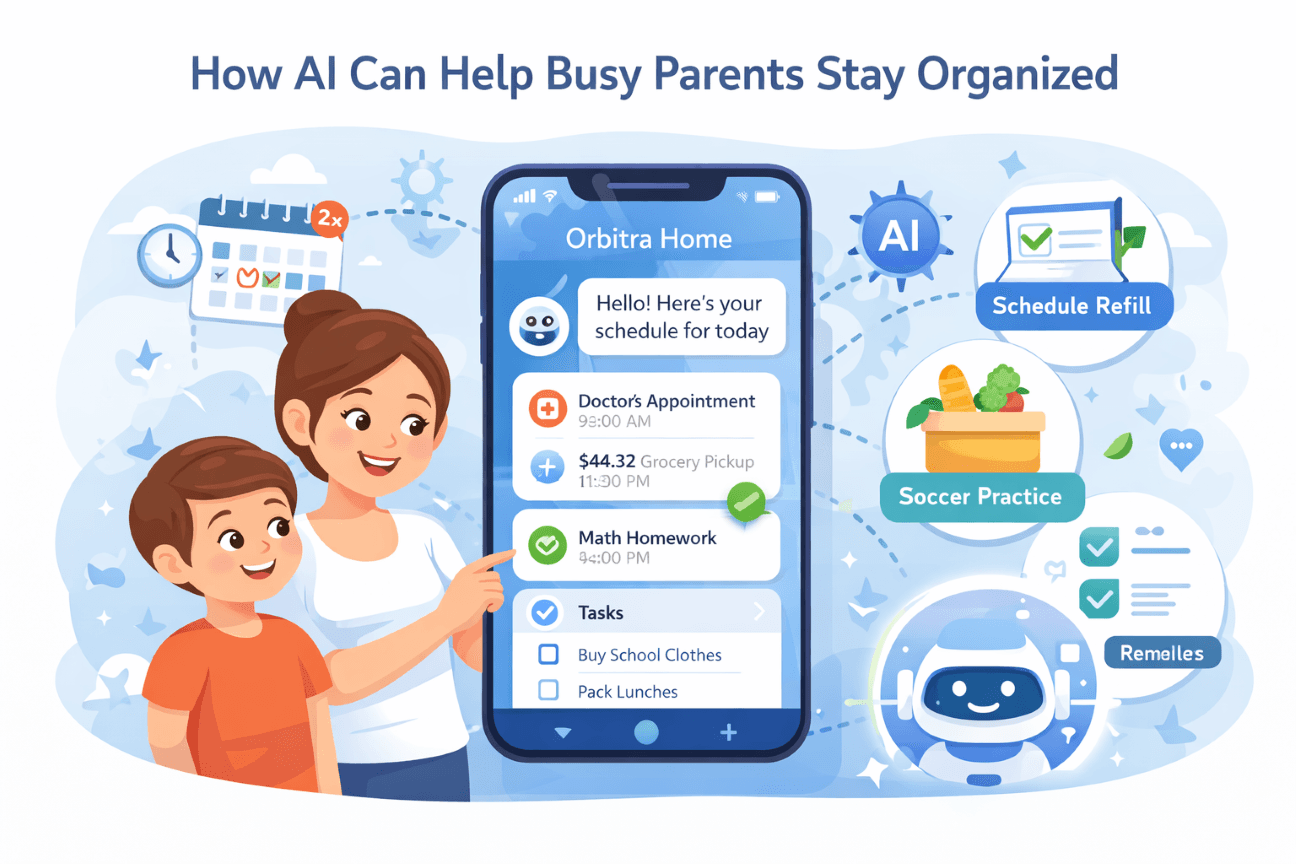
- How AI Can Help Busy Parents Stay Organised - What AI can genuinely do for your family in practical, everyday terms
Found this helpful? Share it:
Don't miss our next post
Get family productivity tips delivered weekly
We respect your privacy. Unsubscribe anytime.